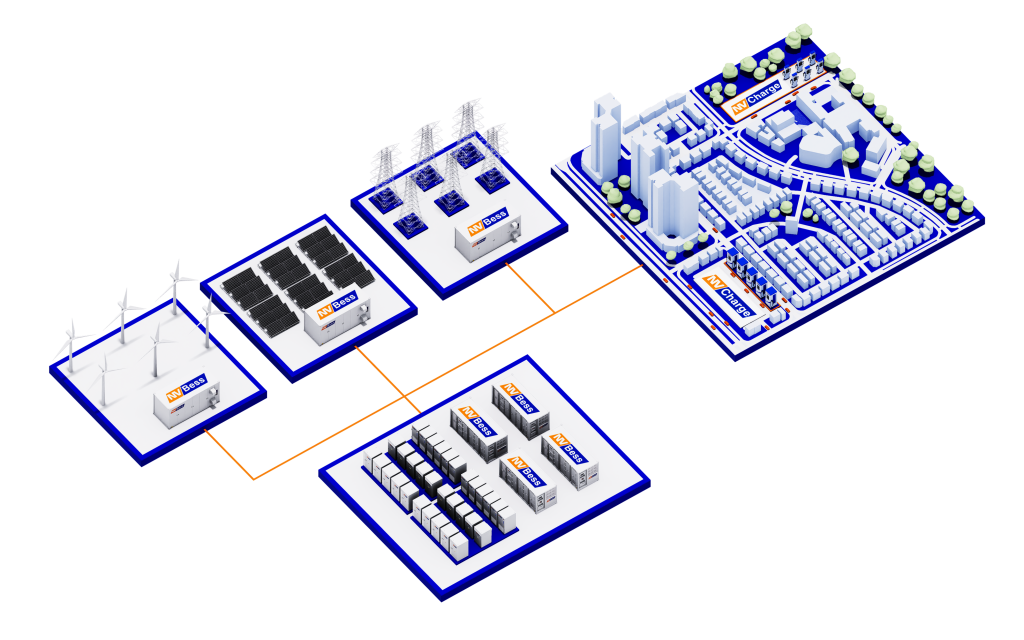
Microgrids require sophisticated, autonomous energy management systems capable of supporting both off-grid and hybrid operations in isolated or mission-critical facilities. The primary resilience benefit of microgrids is their ability to disconnect from the main grid during outages and operate autonomously, allowing facilities to continue serving critical loads such as medical facilities during disruptive events. Long-duration energy storage technologies are particularly well-suited for applications requiring power for extended timeframes when renewables or distributed energy resources aren’t producing, bringing added resiliency to microgrids.
Our energy storage solutions enable seamless islanding operations with automatic transition capabilities, intelligent load balancing that adapts to real-time demand, and efficient integration of renewable energy sources including solar and wind. When tied into an islanded microgrid solution, a BESS can provide backup power during grid outages, with the added benefit of load shifting by charging when electricity is cheap and discharging during higher-rate periods. This ensures continuous, uninterrupted power supply during grid disruptions while simultaneously optimizing energy costs during normal operations. Microgrids incorporating renewable energy resources provide environmental benefits through reduced greenhouse gas emissions and air pollutants, and in some cases can sell power back to the grid during normal operations.